
October 23, 2025
Building Stronger Health Systems Through Effective Referrals: Insights from the mDoc Tele-Education Session
Strengthening the Links That Save Lives
In healthcare, every minute counts, especially when a patient needs to be referred to a higher level of care. A well-functioning referral system can be the difference between life and death. This was the central message of the mDoc tele-education session held on 25th September 2025, titled “Enhancing Patient Care Through Effective Referral Pathways.”
Led by Dr. Adeyanju Solomon Oyetoyan, Director of Medical Services and Disease Control at Lagos State Health District 1, the session shed light on how effective referral systems strengthen patient outcomes, reduce delays, and build trust within the healthcare system. Reached over 300 healthcare professionals across Zoom and YouTube, an indicator of interest in improving healthcare delivery.
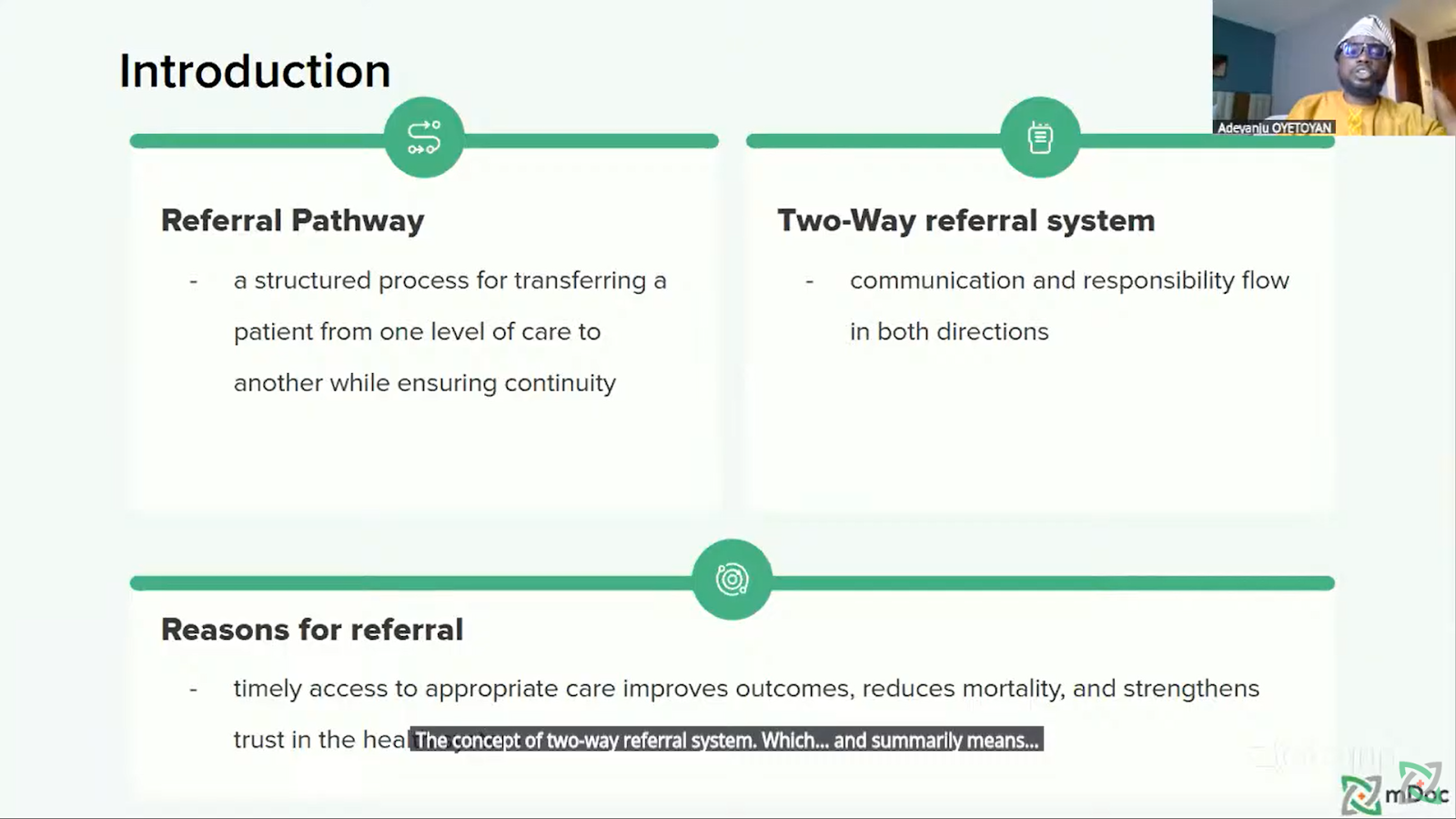
Why Effective Referral Systems Matter
Referral pathways ensure that patients receive the right care, at the right time, and in the right place. When communication, documentation, and transport systems work seamlessly, patients move efficiently through different levels of care, reducing risks and saving lives.
The session highlighted that timely and coordinated referrals are the backbone of an effective health system. They prevent treatment delays, promote continuity of care, and ensure that healthcare workers at all levels stay connected. However, he also pointed out key challenges that persist, namely communication breakdowns between facilities, incomplete documentation, transport barriers, and weak feedback mechanisms.

Bridging the Gaps
The session highlighted several strategies to overcome these challenges. Strengthening policies, capacity building, community and patient engagement, logistics, and financing, and adopting digital tools like NaviHealth.ai™, and training healthcare workers were identified as vital steps toward more efficient referral systems. This was illustrated through a compelling case study from Ifako General Hospital. A 27-year-old woman, referred from Agbado Kola Primary Health Center for delayed second stage of labor due to suspected cephalopelvic disproportion, safely delivered a healthy 4.3 kg baby girl after assisted vaginal delivery. Both mother and newborn remained stable throughout, with Apgar scores of 8 and 9 at 1 and 5 minutes, respectively. They were discharged in good condition on postpartum day 2, with follow-up scheduled at 4 weeks. This case study shows how swift and well-coordinated referral decisions resulted in a positive maternal outcome, leading to both the lives of the mother and child being saved.
The NaviHealth.ai™ feedback platform was also presented as a transformative tool capturing real-time feedback from members about the quality of care they receive. This digital system not only helps facilities identify bottlenecks in referral processes but also ensures that patient voices directly inform quality improvement initiatives. Real-time patient feedback like this from NaviHealth.ai ™ underlined specific needs:
Anonymous: “The facility needs more equipment like BP machines, standard laboratory means, and transportation in case of referrals.”
Anonymous: “The facility needs more staff and ambulances for emergency referral.”
These insights point to the importance of investments in resources and infrastructure to ensure effective referrals.
Engaging Healthcare Workers in Continuous Learning
Participants actively engaged throughout the session, raising thoughtful questions and sharing on-the-ground experiences. Comments such as “We cannot over stress patient education as a means of strengthening referral system” and questions like “Does it mean that the referring facility must have the contact of the receiving hospital before the referral can take place sir?” prove that the interactive nature of the discussion made it more than just a presentation; it became a collaborative space for learning, problem-solving, and innovation. Moreover, 60% of the participants found the training useful and could be used for the training of thier patients, and 80% found the case presenation useful.
Looking Ahead
As Dr. Oyetoyan concluded, “Effective referral pathways save lives and strengthen the entire healthcare system.” His message underscored the urgent need for investment in training, technology, and transport, as well as stronger partnerships between healthcare providers and communities.

The success of this tele-education session with a knowledge gain of 3.40% reaffirms mDoc’s commitment to empowering healthcare professionals with the knowledge and tools they need to deliver better, safer, and more connected care.
Because when referrals work, patients don’t just move through the system; they move toward better health outcomes.

