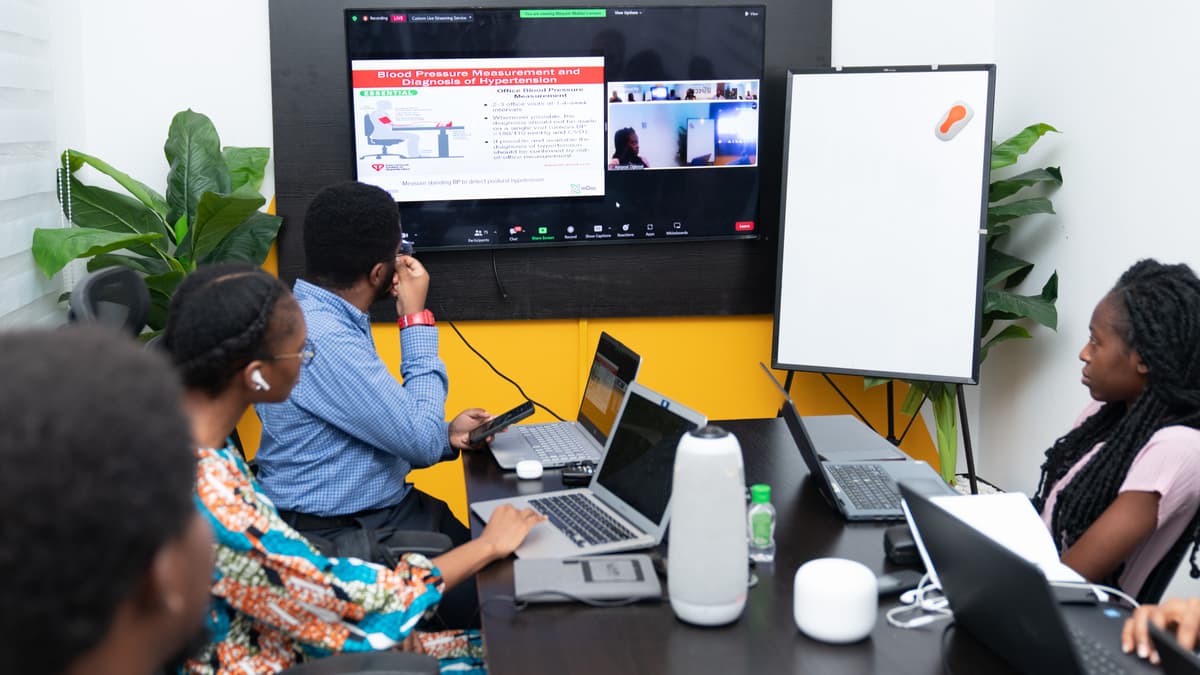
Implementation of the Extension for Community Healthcare Outcomes Model for Hypertension Education of Frontline Health Care Workers in the Federal Capital Territory, Nigeria: Explanatory Sequential Mixed Methods Evaluation
March 31, 2025
Summary:
Background:
The Extension for Community Healthcare Outcomes (ECHO) model was adapted for hypertension education of community health extension workers in the Federal Capital Territory, Nigeria, and delivered as a 7-part series.
Objective:
This study aims to evaluate implementation outcomes of the hypertension ECHO series mapped to the first 3 levels of the Kirkpatrick model. Outcomes included reach, appropriateness (level 1), effectiveness (level 2), and penetration (level 3).
Methods:
From August 2022 to April 2023, 7 hypertension ECHO sessions were delivered via Zoom to a health care worker audience, including community health extension workers at 12 primary health centers (PHCs) in the Hypertension Treatment in Nigeria Program. Healthcare workers provided demographic information, participated in pre- and post-session quizzes, and shared feedback during sessions. One-month post-session surveys and focus group discussions were used to assess the application of knowledge and gather deeper insights. Qualitative and quantitative results were evaluated using an explanatory sequential mixed methods design.
Results:
Across the 7 sessions, a total of 1407 live participants were documented. More than 97% of respondents reported the sessions were useful. Postsession knowledge scores increased (range: 2.3%–10.5%) relative to presession scores. Over 70% of health care workers at participating PHCs reported applying what they learned in their clinical practice. In 6 focus group discussions (n=31), participants noted network connectivity and clinical workload as barriers to live participation and expressed a preference for blended or asynchronous learning.
Conclusions:
The hypertension ECHO program effectively increased knowledge and was deemed useful by the majority of participants. These findings may support the scale-up of remote hypertension education programs for community health extension workers in similar low-resource settings.
Citation(s):
Baldridge A, Odukwe A, Dabiri O, Mobisson L, Munnee M, Ogboye A, Aryee D, Mwale R, Akpakli J, Orji I, Okoli R, Ripiye N, Ojji D, Huffman M, Kandula N, Hirschhorn L
Implementation of the Extension for Community Healthcare Outcomes Model for Hypertension Education of Frontline Health Care Workers in the Federal Capital Territory, Nigeria: Explanatory Sequential Mixed Methods Evaluation
J Med Internet Res 2025;27:e66351
URL: https://www.jmir.org/2025/1/e66351
DOI: 10.2196/66351